- Location: Marunouchi, Chiyoda-ku, Tokyo
- Owner: Toho
- Architect: Yokogawa Tamisuke
- Renovation: July 2018
- Number of seats: 1,826
The birth of the Imperial Theater, commonly known as the “Imperial Theater”, dates back to March 1911. As Japan’s first Western-style theater, since its opening, various performing arts such as opera, musicals and Kabuki have been performed and loved by audiences of all ages.
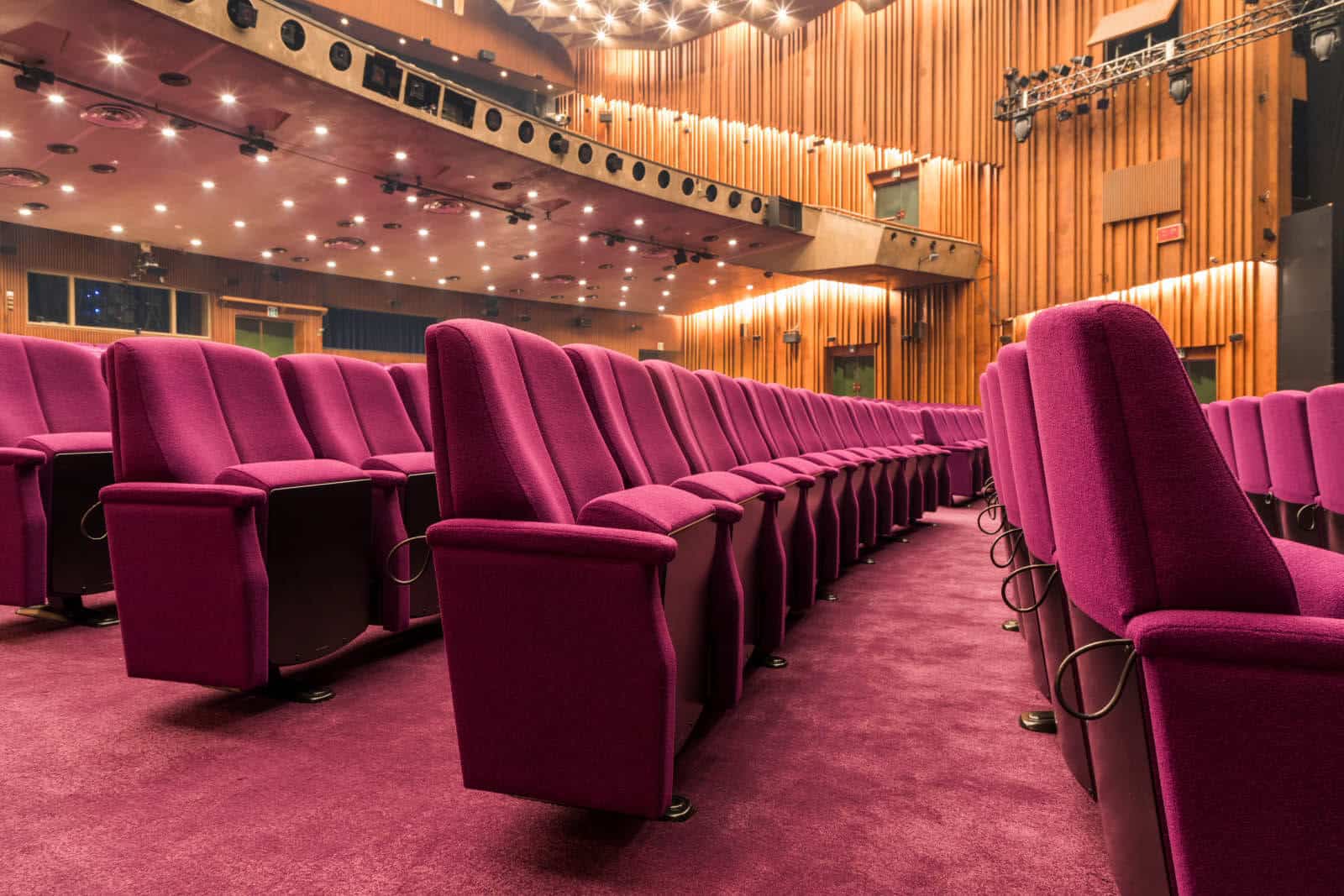
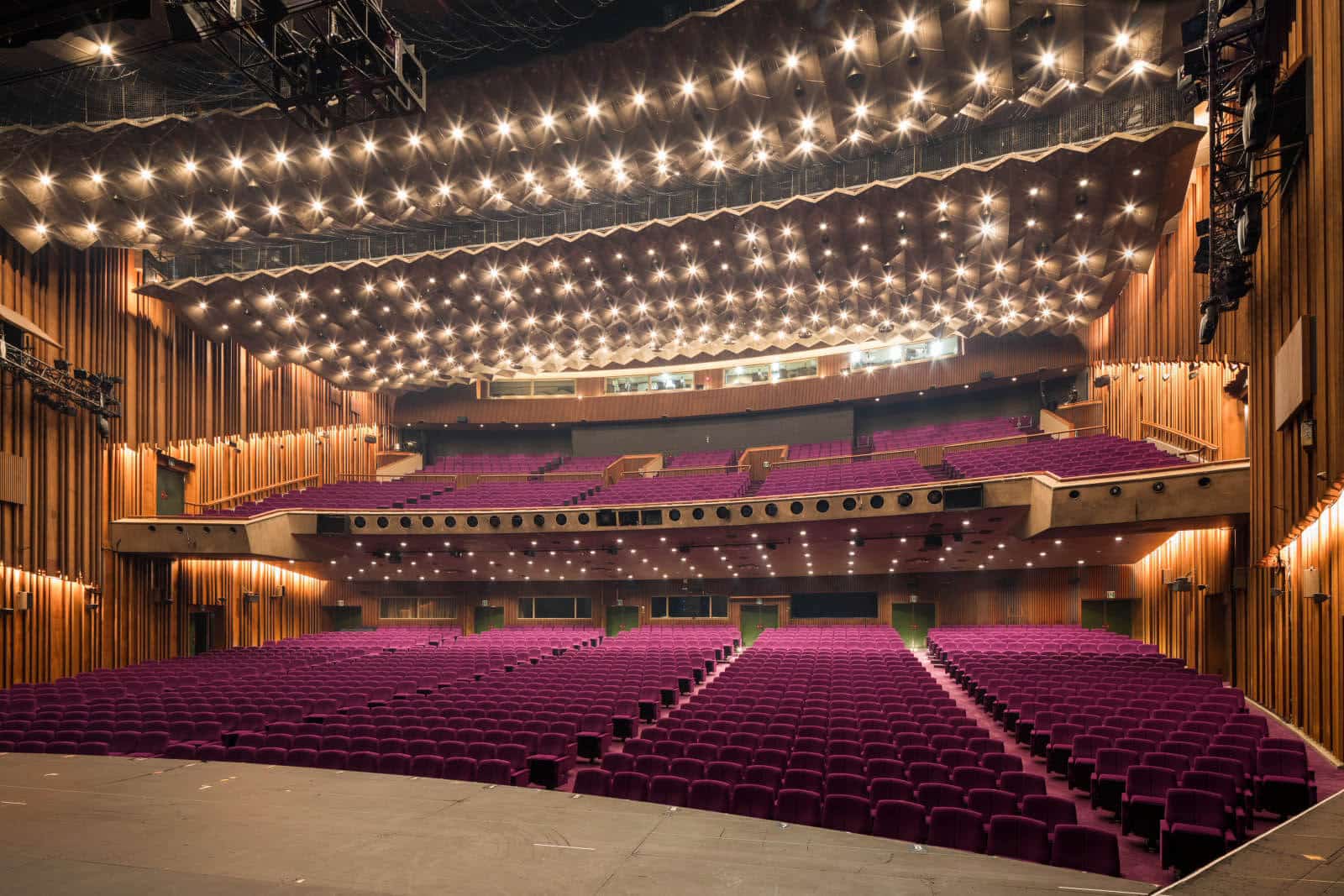
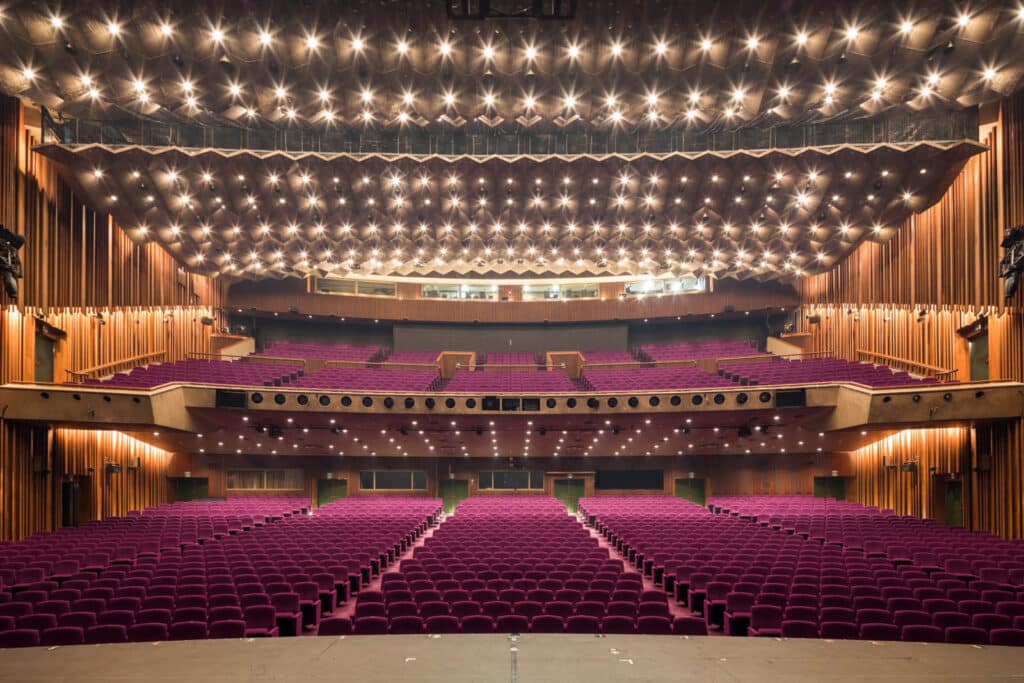
In the past, it was rebuilt twice in the wake of the Great Kanto Earthquake, and the current building was completed in 1966. It is an installation formed with purple chairs glowing on the ceiling of the luxurious auditorium seating, the grand staircases connecting the first and second floors of the lobby called “Korezo Theater,” and the ceiling lighting tracing the rows of constellations.
In 2018, approximately half a century after its completion, it was decided to undertake a large-scale renovation to improve hospitality. In addition to updating the restrooms and carpets in the lobby, the audience seating has been renovated.
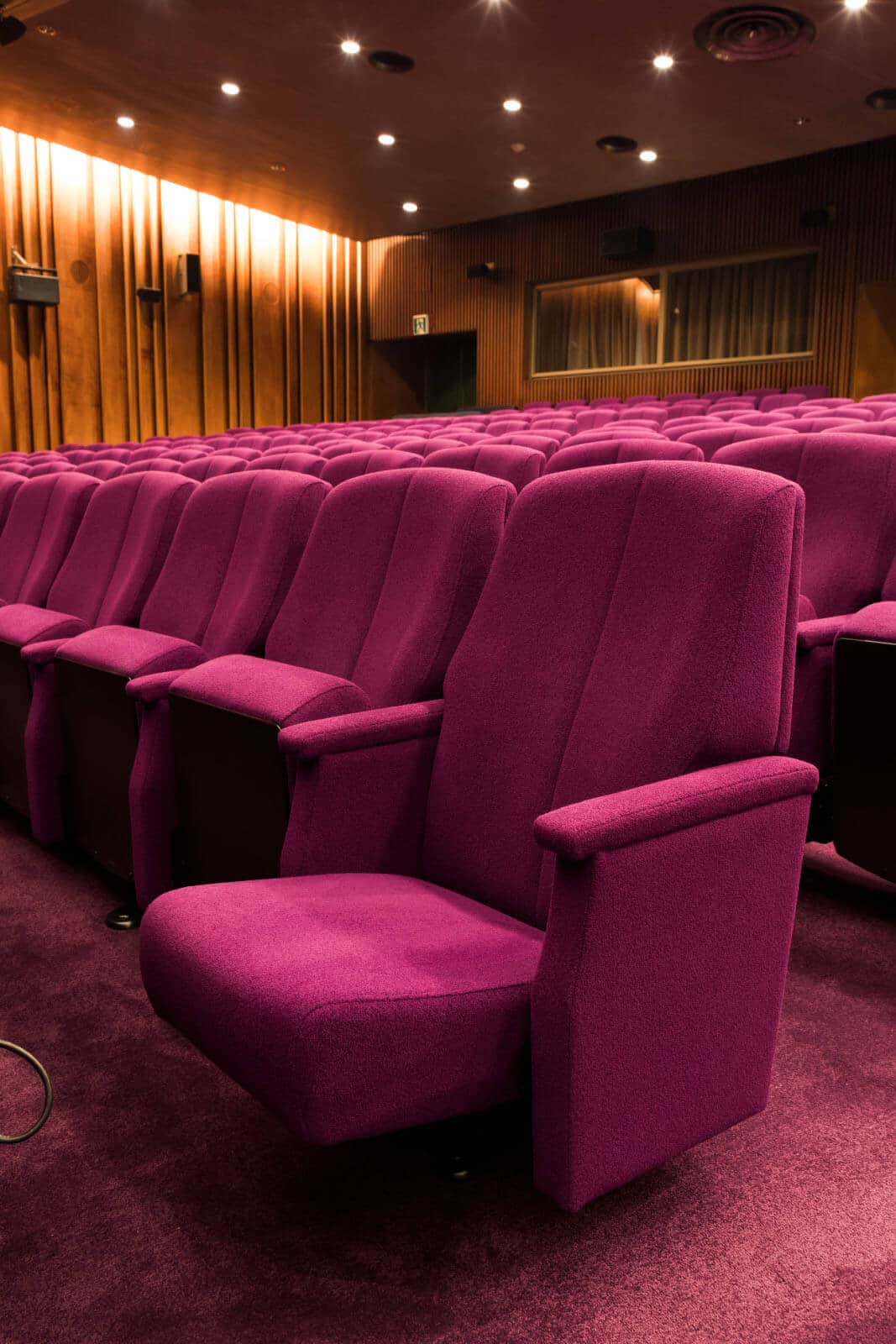
The most important theme in the renovation of the audience seating was to inherit the impression of space that the Imperial Theater had cultivated so far. The elegant violet color and capacity that symbolize the Imperial Theater have been transferred to the audience seating after the renovation.
The audience seating consists of first and second floor seats, and the maximum number of seats when the orchestra pit is not in use is 1,826. There are about 1,200 seats on the second floor and many chairs are lined up, but because they are arranged in a fan shape, you can feel the distance from the stage even from the last row. Although each seat has plenty of space, the whole space is compactly integrated and is full of attention to the ease of seeing the stage and the feeling of unity of the whole auditorium.
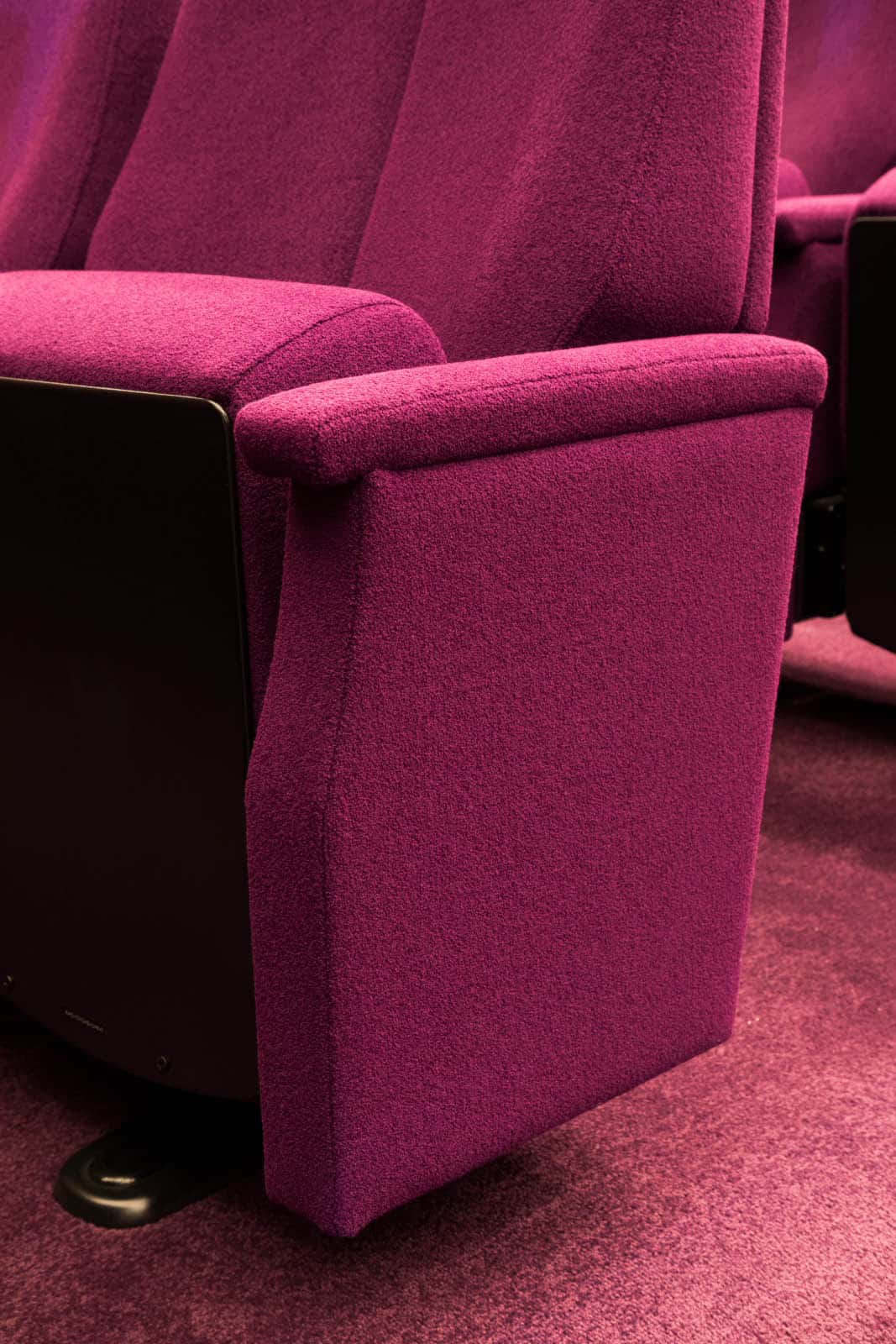
Wood is generally used as the material for the back and elbow pads of theater chairs, but Imperial Theatre chairs are made of textiles from the back to the legs and the tips of the elbow pads. This design, which follows the traditional chair, is an important style in European theaters. The stretched backrest has a solid thickness, which is one of the points that enhances the luxury of the entire audience.
For the textiles, we could not use the same materials as the existing chairs, but we tried to reproduce the colors so that the image of the public seating would not change. By using the same fabrics in the form of carpet as before, it inherits the feeling of sitting.
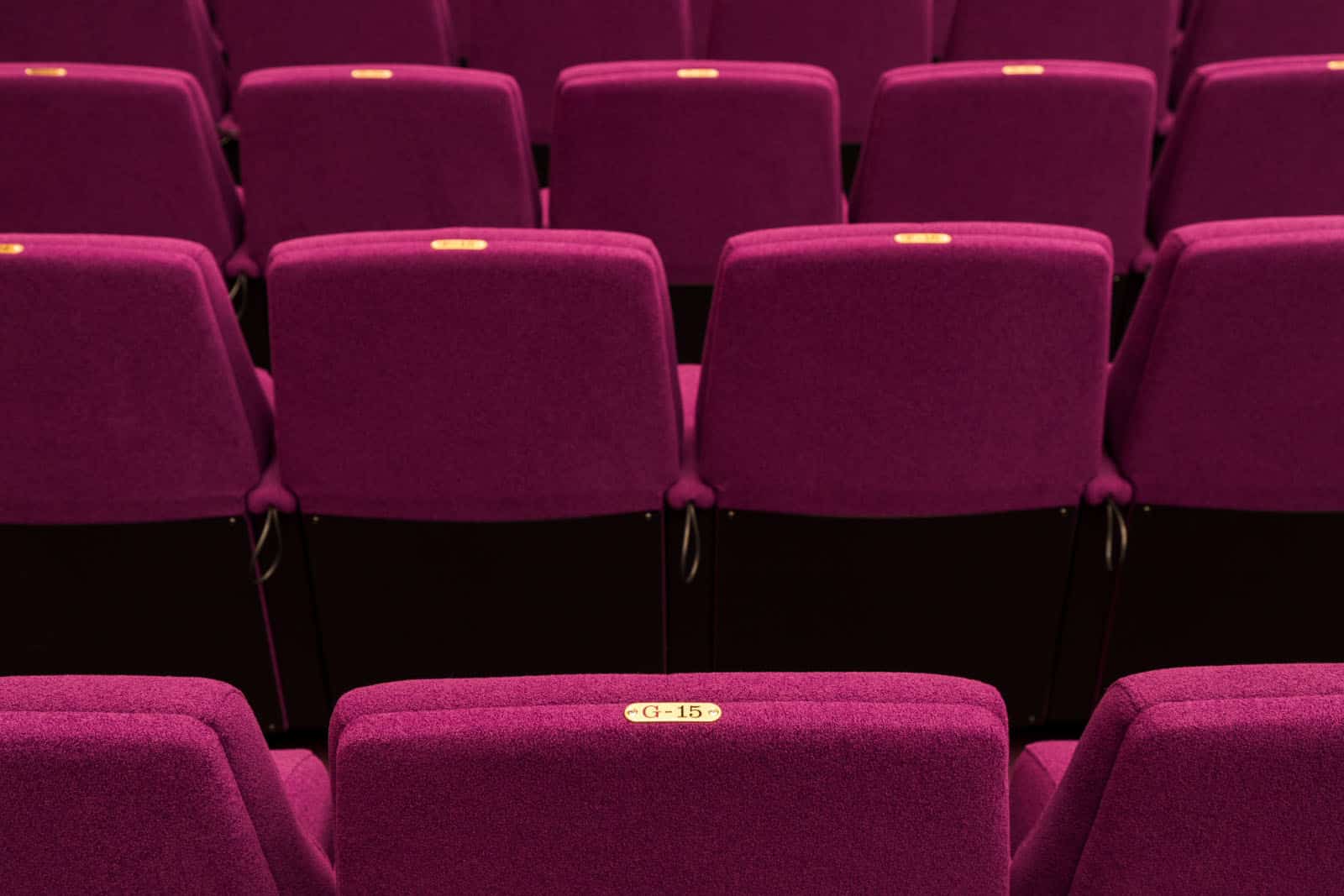
In this renovation, the color of the brass plate is also purple. The lettering with the seat numbers is selected from the western theater point of view, following the typography used for the lobby and doors. It is more visible than the existing fonts and is in harmony with the interior.
Until now, the foot light had exposed equipment, but it has been changed to a shape that is embedded in the chair’s elbow frame. This is a renovation in which the opening width has been checked and precisely adjusted so that the light source at your feet does not distract you during play. It now illuminates only the aisles and looks better. A ring for an umbrella holder is also provided on the back of the chair armrest. By passing an umbrella through this ring, you can cleverly store it in the audience.
As one of Japan’s leading theaters, the Imperial Theatre will continue to present many plays and attract audiences.