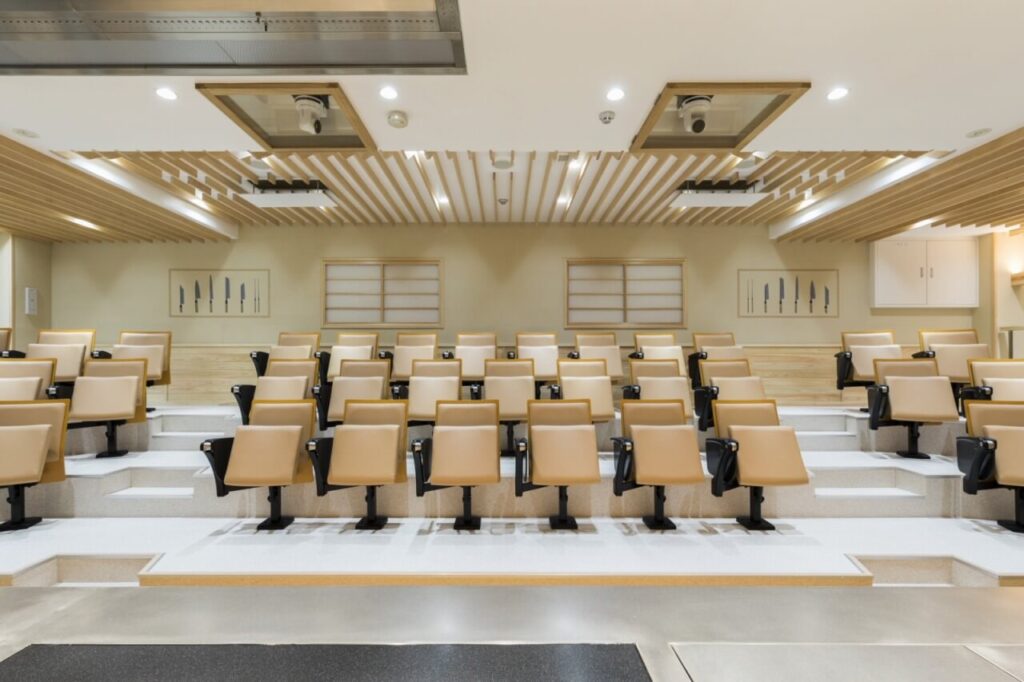
- Location: Nishi-Shinjuku, Shinjuku-ku, Tokyo
- Owner: Shinjuku Cooking School
- Architect: Asahi Sagawa Construction Research Institute
- Construction: 1964
- Renewal: May 2019
- Number of seats: 38
Shinjuku Cooking School has produced many graduates since its inception in 1964. Approximately 500 students are working hard to become a future chef. In recent years, the school has been renovated so that chefs can acquire the necessary knowledge and skills in a satisfying environment. In May 2019, the Japanese cooking demonstration room was reborn to create a learning environment.
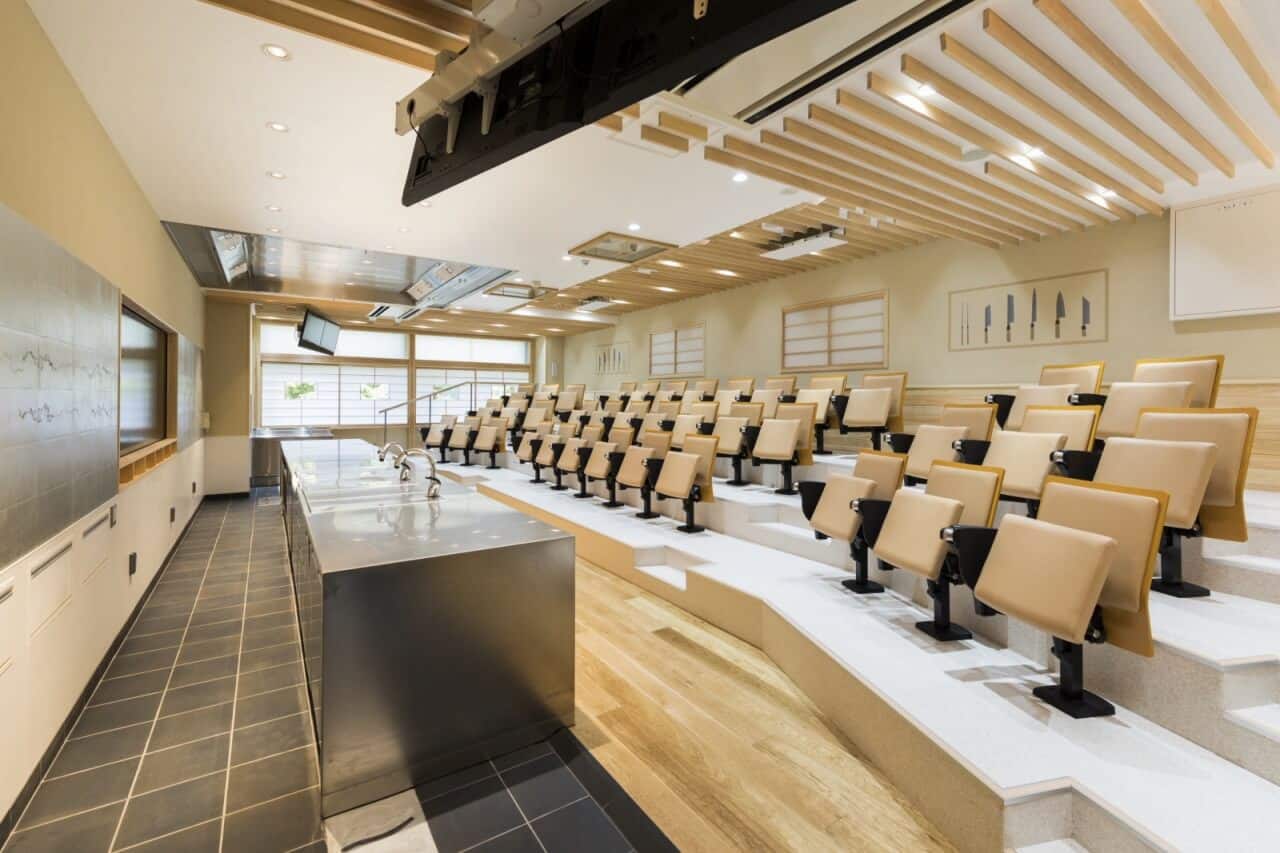
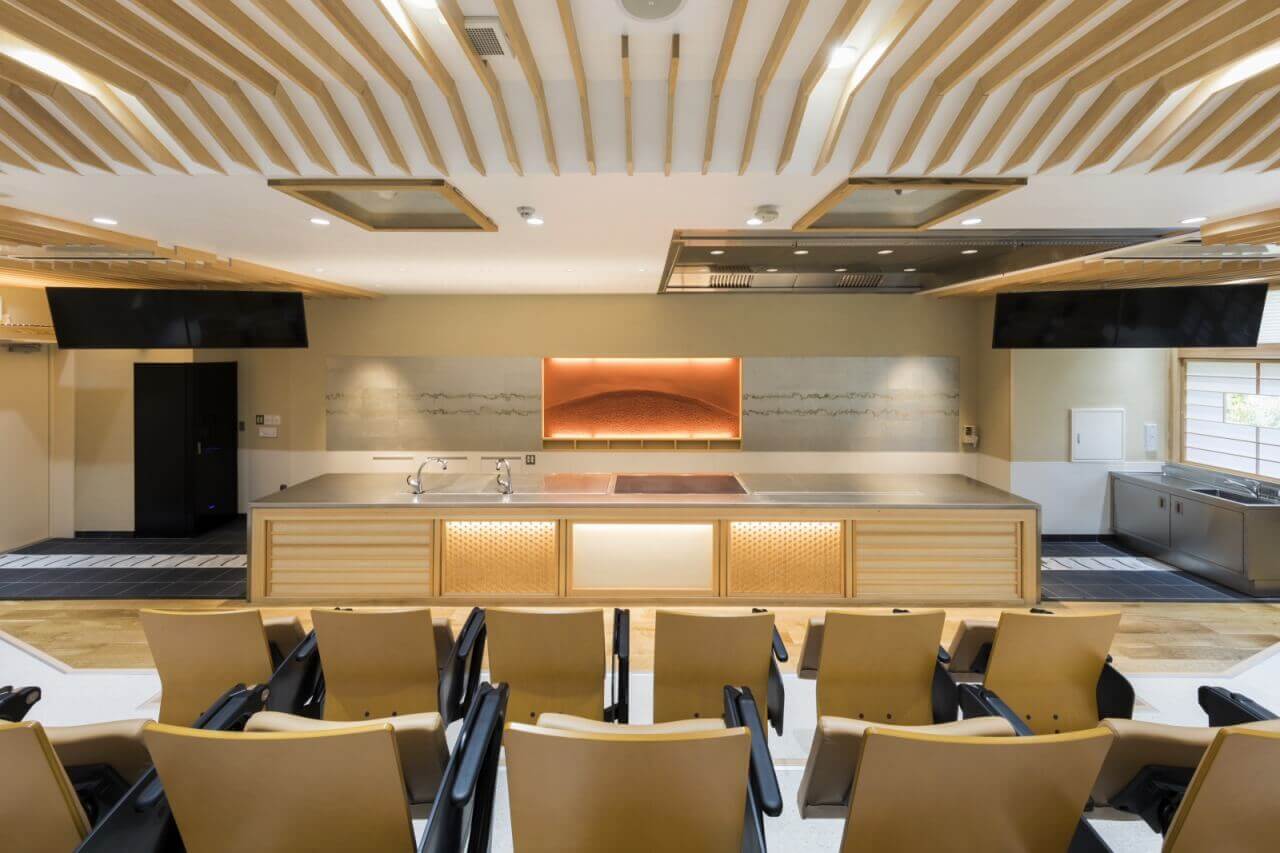
In the past, the interior was only for the functionality of lessons, but thanks to the renovation, a Japanese-themed interior was adopted that is suitable for the name “Japanese Cooking Demonstration Room”. Wood is abundantly used for the ceiling and floor, and Japanese-style materials such as shoji screens and Japanese paper-like materials. You can also change the brightness and color of the lights to suit the kitchen and the content of the lesson.
Traditional classroom furniture is a type in which the desk and chair legs are integrated. Since a maximum of 9 seats were lined up in a row, the difficulty of getting in and out of the seats was raised as a problem.
Kotobukisting’s new product was selected to solve this problem. Developed for the “Lecture Theatre,” where seating is placed on steps to surround the podium, this chair was perfect for a Japanese cooking demonstration room with seating higher than the countertop.
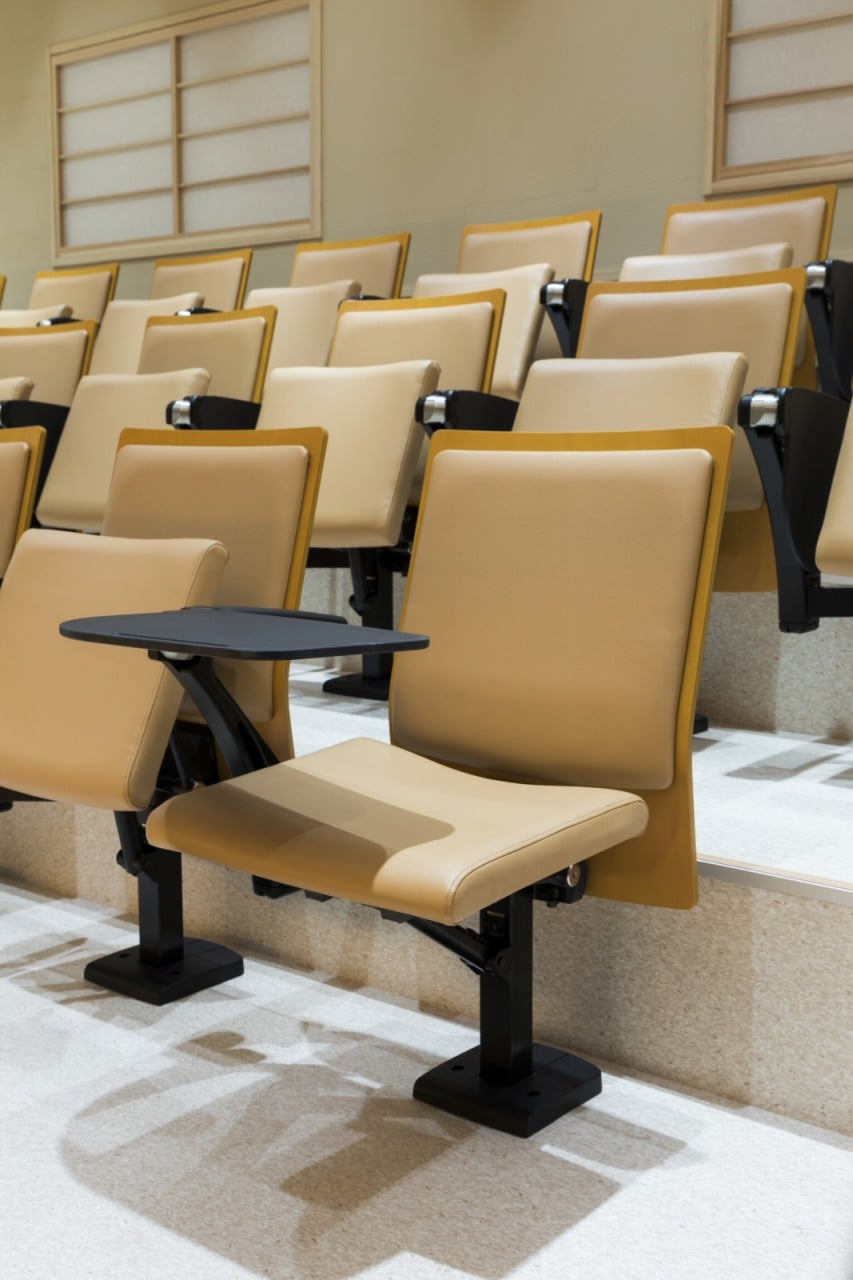
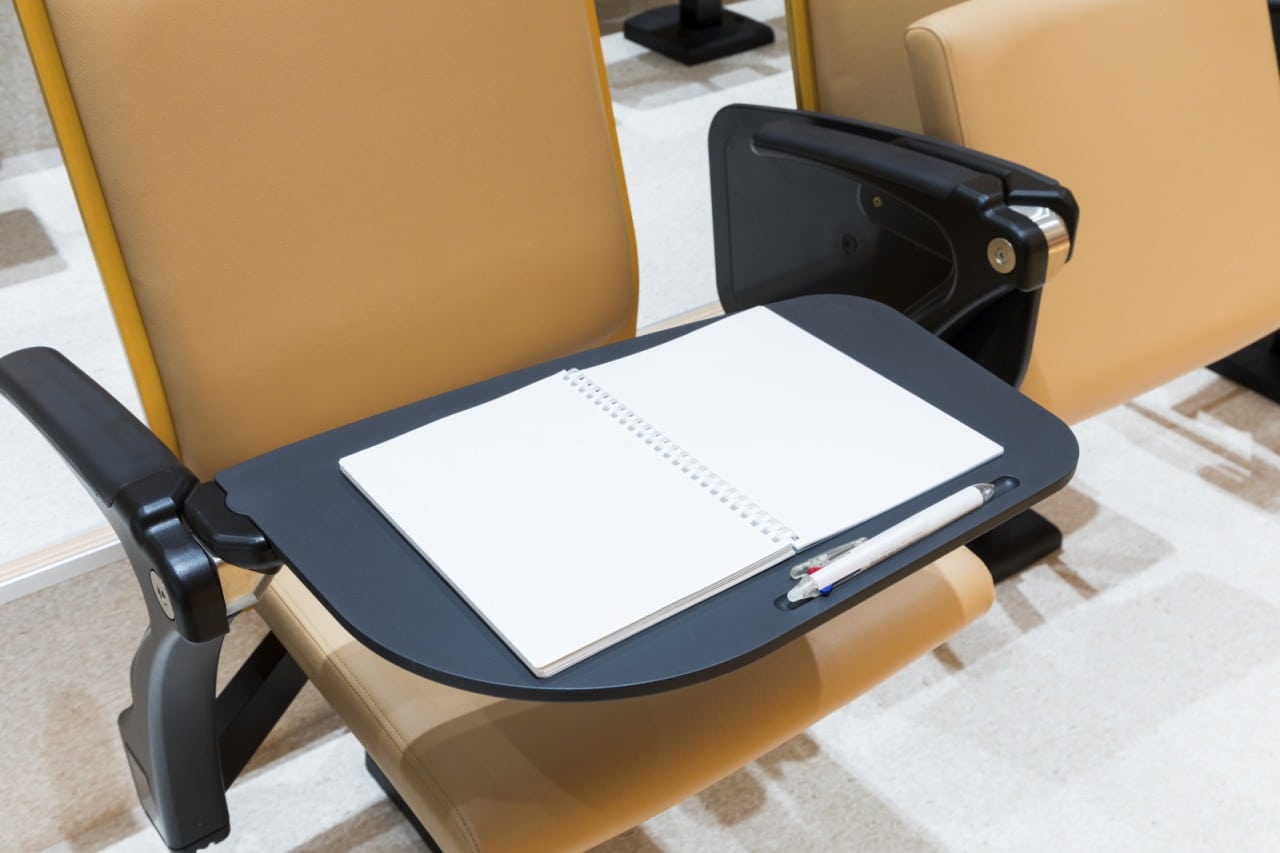
The clean design of one leg extending from under the backrest solves the difficulty of getting in and out of the seat. We also abolished the installation of desks with multiple connected seats, so there is nothing blocking aisle space and the suspension is cleaner. Instead of a desk, a sturdy retractable note holder was installed at each seat. There is plenty of room even if you extend the A4 notebook, and the base is integrated with the armrest, so it has a great sense of stability.
The difficulty of sitting is solved by the tilting mechanism that allows you to sit without having to lower the seat by hand. You can sit smoothly even if your hands are occupied by simply sliding your buttocks towards the seat surface when seated. In addition, when the seat is stowed, the seat can be pushed towards the backrest, which helps to slightly widen the aisle between the seat and the front and back of the seat, making it easier to pass through.
Conventional chairs have little cushioning, which improves seating comfort. Urethane-lined cushions are used on both the large back and seat. Vinyl leather is used for the upholstery to prevent stains even if food is spilled during tasting, and it feels soft against the skin. On the back, the dogleg-shaped natural wood tabletop is impressively mirrored, creating the warmth and dignity of wood in the space.